When temperatures begin dropping in North Carolina, the last thing you want is cold air coming from your vents when the heat is supposed to be running.
Heat pumps are common throughout North Carolina because they can provide both heating and cooling from a single system. But because they operate differently from traditional furnaces, homeowners sometimes notice air that feels cooler than expected during the heating season.
In some cases, this is completely normal. In others, cold air coming from your vents can be a sign of restricted airflow, thermostat problems, low refrigerant, a frozen outdoor unit, or another issue that needs professional attention.
At Hayes HVAC, LLC, we help homeowners throughout Clayton, Raleigh, Cary, Apex, Garner, Fuquay Varina, and surrounding communities keep their homes comfortable throughout the year. If your heat pump is blowing cold air, here are seven common reasons why it may be happening and what you can do about it.
How Does a Heat Pump Heat Your Home?
Before looking at potential problems, it helps to understand how a heat pump works.
Unlike a furnace, which creates heat by burning fuel or using electric heating elements, a heat pump moves heat from one place to another.
During the summer, the system removes heat from inside your home and releases it outdoors. During the winter, the process reverses. The heat pump absorbs available heat from the outdoor air and transfers it inside your home.
Even when it feels cold outside, there is still heat energy available for the system to collect.
Because of this process, the air coming from a heat pump may not feel as hot as the air produced by a traditional furnace. However, your heat pump should still be able to gradually warm your home and maintain the temperature set on your thermostat.
If your system is running but your home keeps getting colder, there may be a problem that needs to be addressed.
1. The Air From a Heat Pump Can Feel Cooler Than You Expect
One of the most important things to understand is that a heat pump does not usually produce the same intense blast of hot air you may associate with a furnace.
The air coming from your vents can feel warm or only slightly warm against your skin, especially when outdoor temperatures are mild.
This does not necessarily mean the system is malfunctioning.
What matters is whether your home is actually reaching and maintaining the temperature set on the thermostat.
If your thermostat is set to 70 degrees and your home stays around that temperature, the system may be operating normally even if the air from the vents does not feel particularly hot.
However, if the air feels truly cold and the indoor temperature continues dropping, it is worth investigating further.
Professional Heating Services can help determine whether your heat pump is operating normally or if an underlying issue is affecting its performance.
2. Your Heat Pump May Be in Defrost Mode
Heat pumps occasionally need to run a defrost cycle during cold weather.
Because the outdoor coil absorbs heat from the outside air, moisture can freeze on the coil when temperatures are low. A light coating of frost can be normal, but too much ice can prevent the system from transferring heat efficiently.
To remove that frost, the heat pump temporarily enters defrost mode.
During this process, the system briefly reverses operation so heat can be directed toward the outdoor coil and melt the ice.
You may notice:
Cooler air from the vents for a short period
Steam coming from the outdoor unit
A change in the sound of the system
The outdoor fan temporarily stopping
Water around the outdoor unit after the frost melts
These signs can be completely normal during a defrost cycle.
However, if your heat pump seems to remain in defrost mode for a long period, becomes covered in heavy ice, or repeatedly blows cold air without warming the home, there may be another problem.
3. Your Thermostat Settings May Be Incorrect
Sometimes the problem is not the heat pump itself.
Before calling for service, take a moment to check your thermostat.
Make sure the system is set to Heat rather than Cool and confirm that the temperature setting is higher than the current indoor temperature.
You should also look at the fan setting.
If the thermostat fan is set to On, the blower may continue circulating air through the house even when the heat pump is not actively heating. During those periods, the air coming from the vents may feel cool.
Setting the fan to Auto typically allows it to operate along with normal heating cycles.
Thermostat problems can also occur if the thermostat:
Has weak or dead batteries
Is not reading the temperature correctly
Has loose wiring
Is installed in a poor location
Has incorrect heat pump settings
Is experiencing a programming issue
If changing the settings does not solve the problem, an HVAC technician can inspect both the thermostat and the heat pump to make sure they are communicating properly.
4. A Dirty Air Filter May Be Restricting Airflow
A dirty air filter is one of the simplest HVAC problems, but it can create much larger issues if it is ignored.
Your heat pump needs steady airflow to move heat throughout your home.
When a filter becomes clogged with dust, pet hair, dirt, and other debris, it becomes harder for the system to circulate enough air.
Restricted airflow may cause:
Weak airflow from your vents
Longer heating cycles
Uneven temperatures
Higher energy usage
Additional strain on HVAC components
Reduced heating performance
Check your filter regularly and replace it when it becomes dirty.
How often a filter needs replacement depends on the type of filter, the number of people and pets in the home, indoor air quality, and how frequently the HVAC system runs.
Regular Maintenance Plans can also help identify airflow problems before they begin affecting your home’s comfort or causing unnecessary wear on the system.
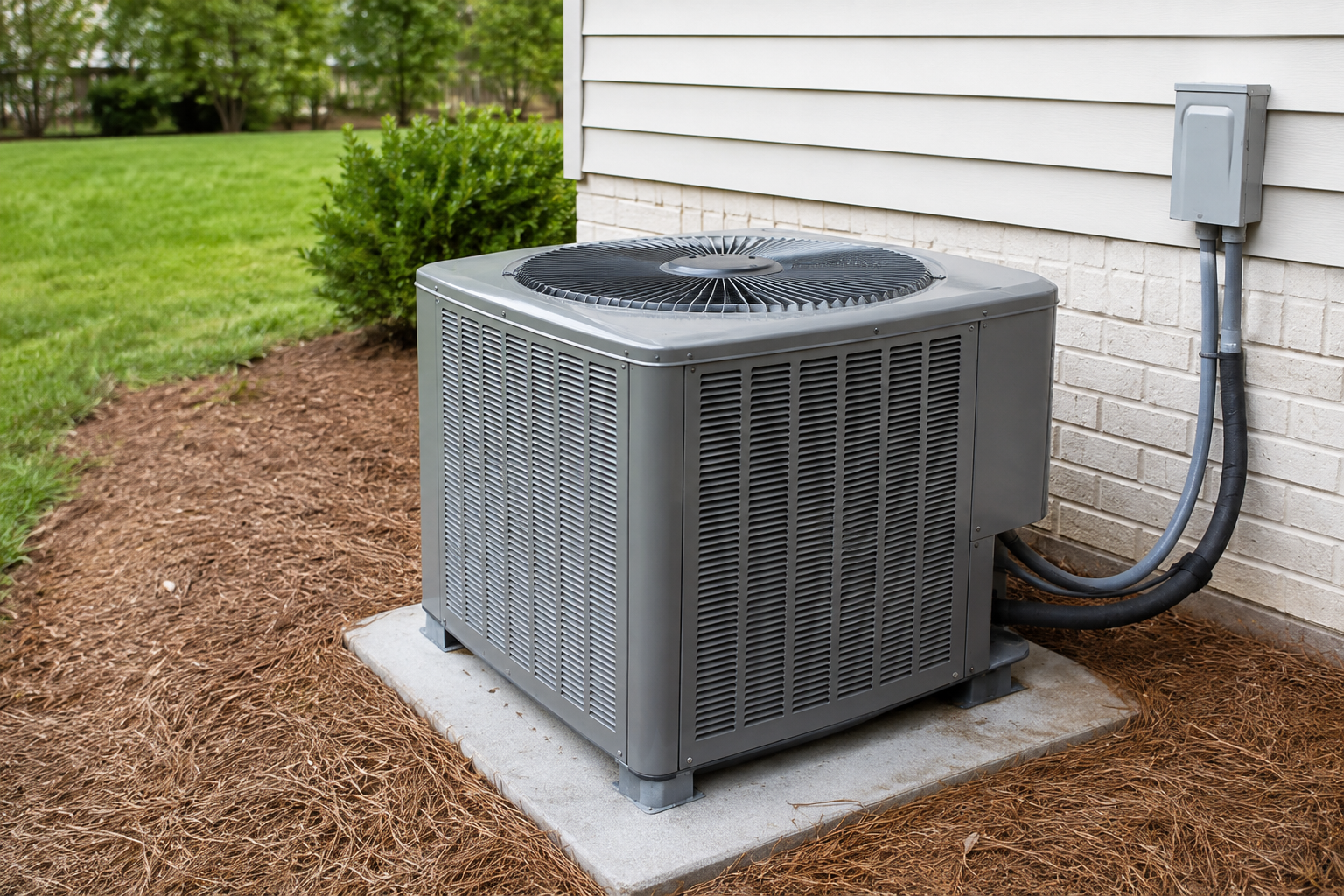
5. The Outdoor Unit May Be Frozen or Blocked
Your outdoor heat pump needs unrestricted airflow to operate properly.
Leaves, grass, dirt, branches, and other debris can accumulate around the unit and make it harder for the system to exchange heat with the outdoor air.
Cold weather can also cause frost to develop on the outdoor coil.
A small amount of frost that disappears during a normal defrost cycle usually is not a concern. However, a unit that becomes heavily coated in ice or remains frozen for an extended period may have a problem.
Possible causes can include:
Restricted airflow
A malfunctioning defrost system
Dirty outdoor coils
Low refrigerant
Sensor problems
Mechanical issues
Homeowners can safely remove loose leaves and debris from around the outdoor unit, but you should not attempt to chip or break heavy ice away from the equipment.
Doing so could damage the coil or other components.
If your heat pump remains frozen or quickly freezes again after defrosting, it is a good idea to have the system professionally inspected.
6. Your Heat Pump May Be Low on Refrigerant
Refrigerant plays a critical role in the heating and cooling process.
Your heat pump relies on refrigerant to absorb and transfer heat. If the system does not have the proper refrigerant level, it may struggle to collect enough heat outdoors and move it into your home.
Unlike fuel or oil, refrigerant is not something a heat pump normally uses up during operation.
If the system is low on refrigerant, there may be a leak somewhere in the system.
Signs of a possible refrigerant issue can include:
Cold air coming from the vents
Reduced heating performance
Long heating cycles
Ice forming on the outdoor unit
Unusual hissing sounds
Higher energy bills
Difficulty reaching the thermostat setting
Refrigerant problems should be handled by a trained HVAC technician.
Simply adding refrigerant without identifying the reason it was lost may not solve the underlying issue.
Because the same refrigerant system is also used when your heat pump operates as an air conditioner, problems can sometimes affect both heating and cooling performance. Hayes HVAC provides professional Cooling Services as well as heating service to help keep your system operating properly throughout every season.
7. A Mechanical or Electrical Component May Be Failing
If the basic troubleshooting steps do not solve the problem, there may be an issue with one of the heat pump’s internal components.
Heat pumps rely on several parts working together to switch between heating and cooling and move heat effectively.
Problems may involve components such as:
The reversing valve
Compressor
Blower motor
Control board
Sensors
Capacitors
Electrical connections
Auxiliary heating components
The reversing valve is especially important because it allows a heat pump to change between heating and cooling modes.
If the valve is not operating correctly, the system may have difficulty switching into heating mode.
Electrical or mechanical problems can also prevent the compressor, blower, or backup heat from operating properly.
These issues usually require professional diagnosis because several different problems can produce similar symptoms.
What Can You Check Before Calling an HVAC Professional?
If your heat pump suddenly begins blowing cold air, there are a few simple things you can check before scheduling service.
Start by:
Making sure the thermostat is set to Heat
Raising the temperature a few degrees
Setting the thermostat fan to Auto
Checking and replacing a dirty air filter
Making sure supply and return vents are open
Removing leaves or debris from around the outdoor unit
Checking whether the outdoor unit is covered in heavy ice
Giving the system a few minutes in case it is completing a defrost cycle
Avoid opening the equipment or attempting electrical, refrigerant, or mechanical repairs yourself.
If the system continues blowing cold air after these basic checks, it is best to have an HVAC professional determine what is causing the problem.
When Should You Call an HVAC Professional?
Occasional cooler air does not always mean your heat pump needs repair.
However, there are situations where professional service is recommended.
Consider scheduling an inspection if:
Your home cannot reach the thermostat setting
Cold air continues coming from the vents
The heat pump runs almost constantly
The outdoor unit is covered in heavy ice
You hear unusual grinding, buzzing, or hissing sounds
Your energy bills suddenly increase
Airflow from the vents becomes unusually weak
The system repeatedly turns on and off
Your heat pump stops producing heat completely
Catching a problem early may help prevent additional damage and reduce the chances of losing heat during colder weather.
Hayes HVAC’s Heating Services can help diagnose heat pump problems and determine whether your system needs maintenance, repair, or another solution.
Regular Maintenance Can Help Prevent Heat Pump Problems
Heat pumps work throughout much of the year because the same equipment provides both heating and cooling.
That means routine maintenance is especially important.
Over time, dirt, normal wear, electrical issues, and airflow restrictions can reduce system performance.
Professional maintenance can include checking:
Air filters
Indoor and outdoor coils
Electrical connections
Thermostat operation
Blower components
Refrigerant system performance
Condensate drainage
Outdoor unit condition
Heating and cooling operation
Routine inspections provide an opportunity to identify small concerns before they become more expensive repairs.
They can also help your system operate more efficiently and reliably during both North Carolina summers and winters.
Your Home’s Airflow Can Affect Comfort Too
Sometimes the heat pump itself is working correctly, but poor airflow makes certain rooms feel colder than others.
Leaky ductwork, closed vents, dirty filters, blocked returns, and poorly balanced airflow can prevent conditioned air from reaching every part of the home evenly.
You may notice:
Certain rooms always feel colder
Weak airflow from specific vents
Large temperature differences between floors
Excess dust around registers
Rooms that feel stuffy
Higher than expected heating and cooling costs
Airflow problems can also contribute to indoor comfort and air quality concerns.
Hayes HVAC offers Indoor Air Quality solutions that can help address issues such as excess dust, humidity, allergens, odors, and poor circulation throughout the home.
Trust Hayes HVAC for Heat Pump Service in North Carolina
If your heat pump is blowing cold air, the problem may be as simple as a thermostat setting or dirty filter. It could also indicate a frozen outdoor unit, refrigerant issue, airflow problem, or mechanical component that needs professional attention.
The experienced team at Hayes HVAC can inspect your system, identify the cause, and recommend the right solution for your home.
Hayes HVAC proudly provides Heating Services, Cooling Services, Maintenance Plans, and Indoor Air Quality solutions for homeowners throughout Clayton, Raleigh, Cary, Apex, Garner, Fuquay Varina, and surrounding communities.
Our team is committed to honest recommendations, quality workmanship, and helping North Carolina homeowners stay comfortable throughout every season.
If your heat pump keeps blowing cold air or your home is struggling to stay warm, contact Hayes HVAC today at (919) 609-2006 for a free estimate. Whether you need heat pump repair, routine maintenance, improved airflow, or help diagnosing a heating problem, our team is ready to help.