When your air conditioner stops cooling properly, one of the first concerns you may hear about is the compressor.
The compressor is a major component of your AC system, and problems with it can lead to weak cooling, unusual noises, higher energy bills, or a system that will not run at all. Because compressor repairs can sometimes be expensive, homeowners often want to know whether the compressor is actually failing or if a smaller problem could be causing similar symptoms.
The good news is that not every cooling problem means you have a bad compressor. Issues with electrical components, airflow, refrigerant, or the thermostat can sometimes create similar warning signs.
At Hayes HVAC, LLC, we help homeowners throughout Clayton, Raleigh, Cary, Apex, Garner, Fuquay Varina, Holly Springs, and surrounding communities diagnose air conditioning problems and determine the right solution. Here are seven signs that may indicate your AC compressor needs professional attention.
What Does an AC Compressor Do?
The compressor plays an important role in the refrigeration cycle that allows your air conditioner to cool your home.
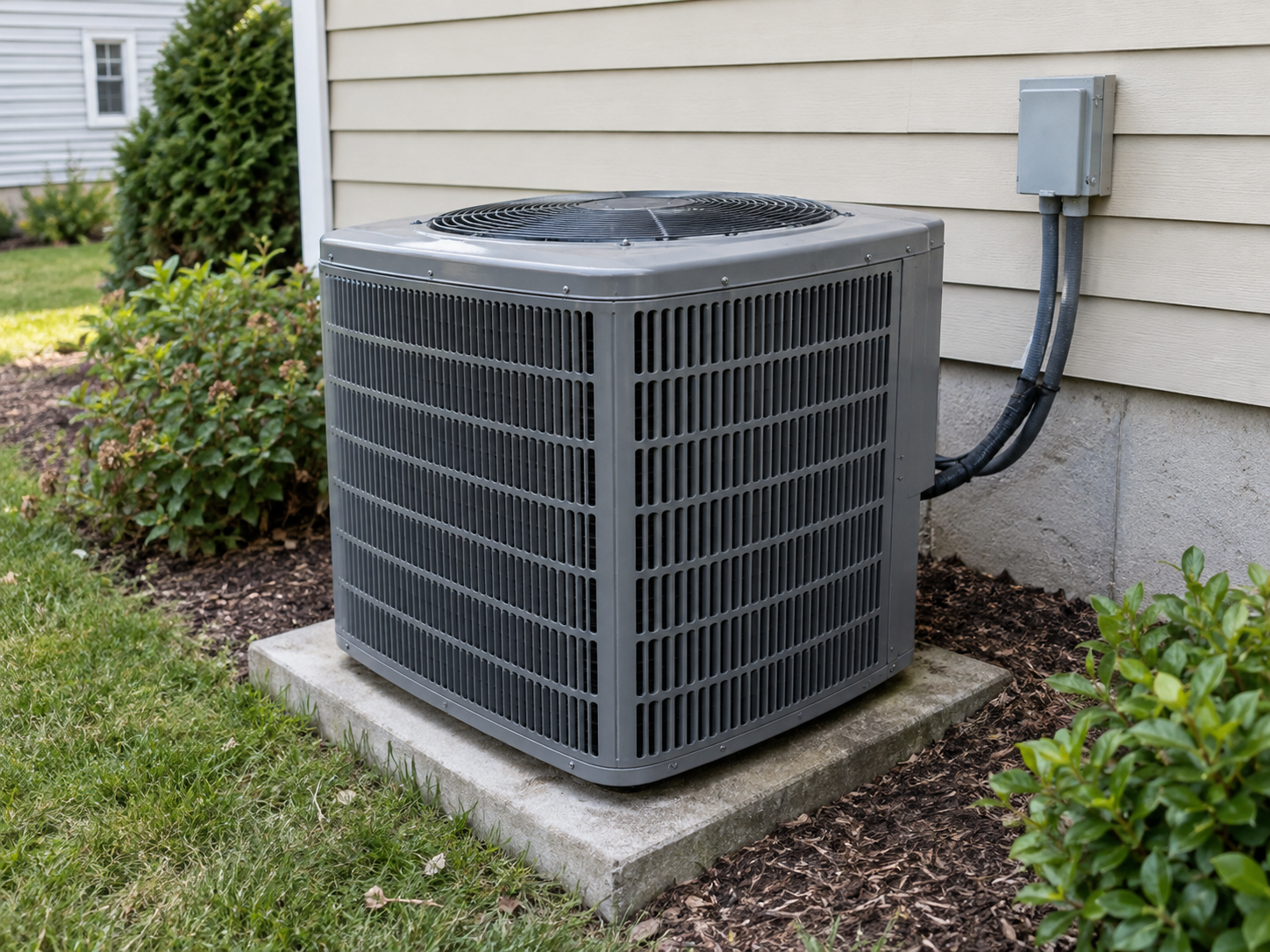
Located inside the outdoor unit, the compressor circulates refrigerant between the indoor and outdoor portions of your system. It raises the pressure of the refrigerant so heat absorbed from inside your home can eventually be released outdoors.
Without a properly functioning compressor, your AC cannot effectively move heat out of your home.
Because the compressor works together with many other components, however, diagnosing a compressor problem is not always as simple as looking at one symptom.
Professional Cooling Services can help determine whether the compressor itself is failing or another HVAC component is responsible for the problem.
1. Your AC Is Running but Not Cooling the House
One of the most noticeable signs of an AC problem is a system that appears to be running but does not cool your home effectively.
You may hear the indoor fan operating and feel air coming from the vents, but the temperature inside the home does not drop.
A failing compressor can prevent refrigerant from circulating properly, which reduces the system’s ability to remove heat.
You may notice:
- Warm or slightly cool air from the vents
- Indoor temperatures continuing to rise
- The thermostat never reaching the desired setting
- Your AC running for long periods
- Poor cooling throughout the entire home
However, poor cooling can also be caused by a dirty air filter, low refrigerant, frozen evaporator coil, thermostat issue, or airflow problem.
That is why professional diagnosis is important before assuming the compressor needs replacement.
2. You Hear Loud or Unusual Noises From the Outdoor Unit
Air conditioners make some noise during normal operation, but new or unusually loud sounds from the outdoor unit should not be ignored.
A compressor experiencing mechanical or electrical problems may produce sounds such as:
- Grinding
- Rattling
- Buzzing
- Humming
- Clicking
- Hard starting noises
A loud humming sound without the system successfully starting may indicate that the compressor is struggling to operate. Grinding or rattling sounds can sometimes point to internal mechanical damage.
However, other outdoor components such as the condenser fan motor, capacitor, contactor, or loose hardware can also cause unusual noises.
If your outdoor unit suddenly sounds different than normal, shutting the system off and scheduling an inspection can help prevent further damage.
3. Your Outdoor Unit Won’t Start
If your indoor blower is running but the outdoor AC unit is not, there may be a problem with the compressor or one of the electrical components responsible for starting it.
In some cases, the compressor may try to start but fail.
You might hear:
- A clicking sound
- Humming from the outdoor unit
- The system trying to start repeatedly
- The outdoor unit starting and stopping quickly
A compressor that will not start does not automatically mean the compressor itself has failed.
A bad capacitor, contactor, electrical connection, thermostat signal, or tripped breaker can sometimes prevent the outdoor unit from operating correctly.
Because several problems can create the same symptom, an HVAC technician should test the system before determining that the compressor needs repair or replacement.
4. Your Circuit Breaker Keeps Tripping
An air conditioner that repeatedly trips the circuit breaker deserves professional attention.
Your AC requires a significant amount of electricity to operate, especially when the compressor starts.
If the compressor is struggling or developing an electrical problem, it may begin drawing more current than normal and cause the breaker to trip.
Other possible causes include:
- Damaged wiring
- A failing capacitor
- Electrical shorts
- A struggling fan motor
- Loose electrical connections
- Other internal equipment problems
Resetting a breaker once may be reasonable if it has unexpectedly tripped.
However, if the breaker trips again after the system starts, avoid repeatedly resetting it. The breaker is designed to protect the electrical system, and repeated trips usually indicate that something needs to be inspected.
A professional technician can determine whether the compressor or another electrical component is causing the problem.
5. Your AC Has Trouble Starting
A compressor that is beginning to fail may have difficulty starting properly.
You may notice the outdoor unit attempting to turn on several times before it begins operating, or the system may make a loud humming or clicking sound when starting.
This is sometimes referred to as hard starting.
Possible causes can include problems with:
- The compressor
- Start or run capacitors
- Electrical connections
- Contactor
- Voltage
- Other starting components
It is important not to immediately assume that a hard-starting system means the compressor is ruined.
A relatively small electrical component can sometimes create symptoms that appear similar to compressor failure.
Having the system professionally tested can help identify the actual problem before more expensive repairs are considered.
Regular Maintenance Plans can also help identify worn electrical components and other concerns before they cause a complete AC breakdown.
6. Your Energy Bills Have Increased Unexpectedly
A sudden increase in your electricity bill can sometimes indicate that your air conditioner is no longer operating efficiently.
If the compressor is struggling to circulate refrigerant or maintain proper cooling performance, the system may run longer to reach the thermostat setting.
Longer cooling cycles can lead to increased energy usage.
You may notice:
- Your AC running almost constantly
- Longer cooling cycles than normal
- The home taking much longer to cool
- Rising utility bills without a major change in thermostat settings
- Reduced comfort despite increased system operation
Of course, high energy bills can have many causes.
Dirty filters, duct leaks, poor insulation, refrigerant problems, extreme outdoor temperatures, or aging HVAC equipment can all increase energy use.
If your energy costs rise along with other cooling problems, it may be worth having the entire system inspected.
7. The Compressor or Outdoor Unit Is Overheating
Your outdoor AC unit releases the heat that your system removes from inside the home.
If the compressor is struggling, it may operate at unusually high temperatures or shut itself down as a protective measure.
Possible causes of overheating include:
- Dirty condenser coils
- Poor airflow around the outdoor unit
- Electrical problems
- Refrigerant issues
- Heavy system strain
- Mechanical compressor problems
You may notice the AC working for a while and then shutting off unexpectedly before your home reaches the thermostat setting.
If the system repeatedly overheats or shuts down, continuing to run it may cause additional damage.
Keep leaves, grass, and other debris away from the outdoor unit, but avoid opening the equipment or attempting internal repairs yourself.
Could Something Else Be Causing the Problem?
Yes.
One of the most important things homeowners should know is that several less-expensive HVAC problems can create symptoms similar to a bad compressor.
Before replacing a compressor, a technician may inspect components such as:
- Capacitors
- Contactors
- Electrical connections
- Refrigerant levels
- Condenser fan motor
- Thermostat
- Evaporator and condenser coils
- Air filters
- System controls
For example, a failed capacitor may prevent the compressor from starting even though the compressor itself is still functional.
Low refrigerant or restricted airflow can also reduce cooling performance and place additional stress on the system.
A proper diagnosis helps prevent replacing an expensive component when the real problem may be somewhere else.
What Causes an AC Compressor to Fail?
Compressors are designed to operate for many years, but several conditions can contribute to premature wear.
Common factors include:
- Refrigerant leaks
- Dirty condenser coils
- Electrical problems
- Poor maintenance
- Overheating
- Incorrect refrigerant levels
- System age
- Excessive strain from another HVAC problem
Routine maintenance cannot prevent every compressor failure, but it can help identify conditions that place unnecessary stress on the system.
Keeping coils clean, maintaining proper airflow, checking electrical components, and addressing refrigerant problems early can all support reliable AC operation.
Should You Repair or Replace a Bad AC Compressor?
If testing confirms that the compressor has failed, the next question is whether replacing the compressor or replacing the entire HVAC system makes more sense.
The answer depends on several factors, including:
- The age of the AC system
- Overall equipment condition
- Warranty coverage
- Cost of the compressor repair
- Refrigerant type
- History of previous repairs
- Efficiency of the current system
For a relatively new system that is otherwise in good condition, a compressor replacement may make sense, especially if the component is still covered by a manufacturer warranty.
For an older system with multiple problems, investing in a complete replacement may sometimes provide better long-term value.
Hayes HVAC focuses on honest recommendations based on the condition of your equipment rather than assuming every compressor problem requires a new system.
When Should You Call an HVAC Professional?
Compressor problems involve refrigerant, high-voltage electrical components, and specialized equipment, so they should be diagnosed by a qualified HVAC technician.
Schedule professional service if:
- Your AC runs but does not cool
- The outdoor unit will not start
- You hear loud grinding, humming, or buzzing noises
- Your breaker repeatedly trips
- The system struggles to start
- Your AC repeatedly shuts down
- Cooling performance suddenly gets worse
- Your energy bills increase along with other AC problems
Catching a problem early may help prevent damage to additional components and give you more repair options.
Hayes HVAC’s Cooling Services can help identify whether the issue involves the compressor, refrigerant system, electrical components, airflow, or another part of your AC.
Regular Maintenance Can Help Protect Your AC System
Your compressor is one of the most important and costly components in your air conditioning system.
Reducing unnecessary strain can help support reliable operation throughout North Carolina’s cooling season.
Professional maintenance may include inspecting:
- Electrical connections
- Refrigerant system performance
- Indoor and outdoor coils
- Air filters
- Condenser components
- Blower operation
- Thermostat performance
- Overall cooling efficiency
Regular service also gives technicians an opportunity to identify small issues before they contribute to larger repairs.
Hayes HVAC offers Maintenance Plans designed to help homeowners stay ahead of HVAC problems and keep their systems operating as efficiently as possible.
Trust Hayes HVAC for AC Repair in North Carolina
If your air conditioner is running but not cooling, making unusual noises, struggling to start, or repeatedly tripping the breaker, the compressor could be part of the problem.
However, these symptoms can also be caused by less serious electrical, airflow, or refrigerant issues. Having the system properly diagnosed is the best way to determine what actually needs to be repaired.
Hayes HVAC proudly provides Cooling Services, Maintenance Plans, and Indoor Air Quality solutions for homeowners throughout Clayton, Raleigh, Cary, Apex, Garner, Fuquay Varina, Holly Springs, and surrounding communities.
Our team is committed to honest recommendations, dependable workmanship, and helping North Carolina homeowners make informed decisions about their HVAC systems.
If you suspect your AC compressor is failing or your cooling system isn’t working like it should, contact Hayes HVAC today at (919) 609-2006 for a free estimate. Whether you need AC repair, system diagnostics, routine maintenance, or help deciding whether repair or replacement makes sense, our team is ready to help.