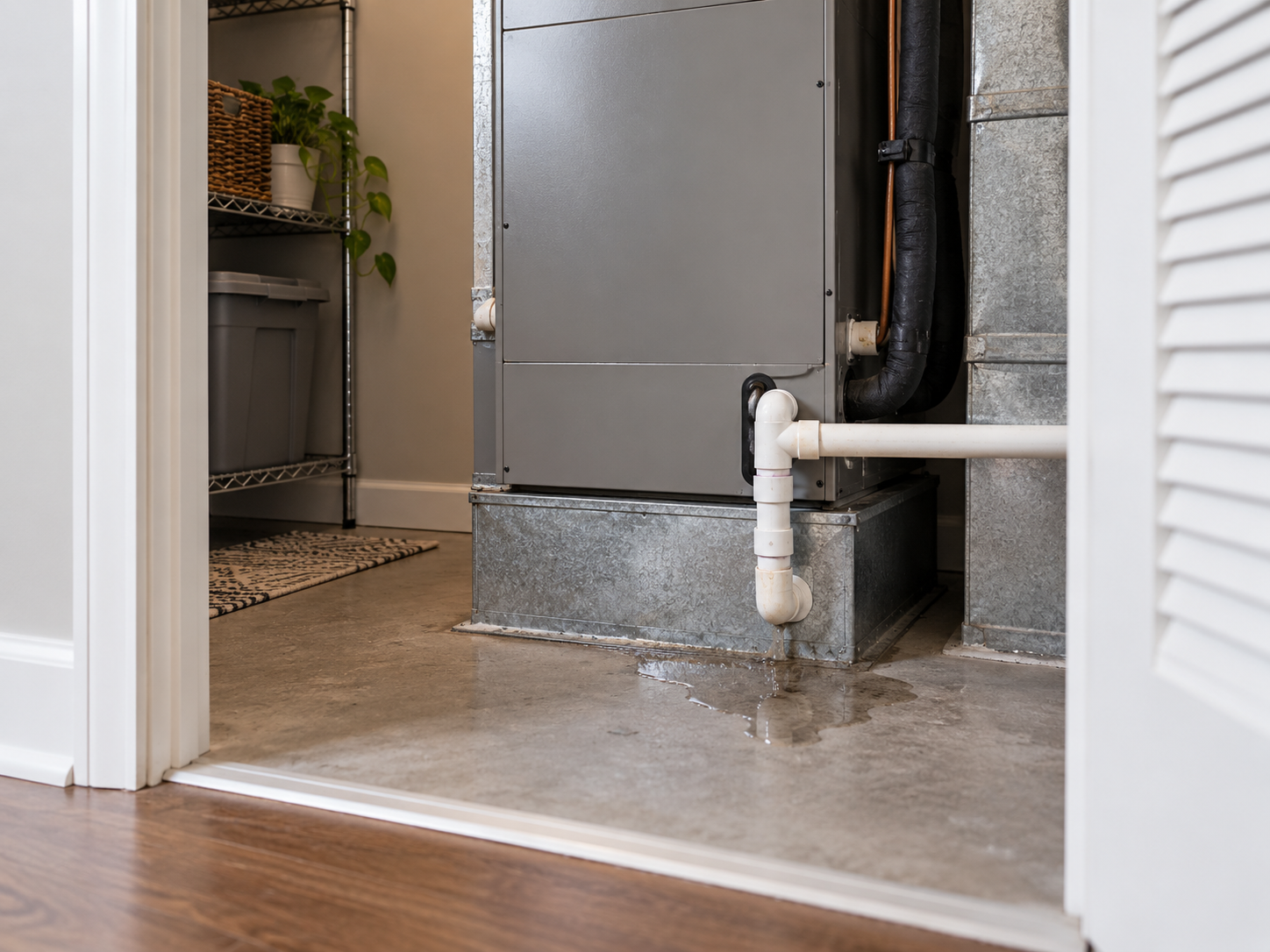
Finding water around your indoor air conditioning unit can be alarming, especially during a hot North Carolina summer when your AC is running almost constantly.
Your air conditioner naturally produces moisture as it removes heat and humidity from the air inside your home. Under normal conditions, that moisture collects in a drain pan and exits through a condensate drain line. If something interferes with that process, water can begin backing up, overflowing, or leaking into your home.
Sometimes the cause is relatively simple, such as a clogged drain line. Other times, an AC leak can point to frozen coils, refrigerant problems, damaged components, or another issue that needs professional attention.
At Hayes HVAC, LLC, we help homeowners throughout Clayton, Raleigh, Cary, Apex, Garner, Fuquay Varina, Holly Springs, and surrounding communities diagnose air conditioning problems and restore reliable cooling. Here are seven common reasons your AC may be leaking water inside your house.
Why Does Your Air Conditioner Produce Water?
Before looking at potential problems, it helps to understand why water forms inside an air conditioning system in the first place.
Your AC does more than cool your home. It also removes moisture from the indoor air.
As warm, humid air passes over the cold evaporator coil, moisture in the air condenses into water droplets. This water normally falls into a condensate drain pan and flows through a drain line that carries it safely away from your HVAC system.
During North Carolina’s humid summer months, your system may remove a significant amount of moisture from the air each day.
If the drain pan, drain line, evaporator coil, or another part of that process is not working correctly, the water may end up somewhere it shouldn’t.
1. Your Condensate Drain Line Is Clogged
A clogged condensate drain line is one of the most common reasons an air conditioner leaks water indoors.
Over time, dirt, dust, algae, mold, and other buildup can collect inside the drain line. When the blockage becomes large enough, condensation can no longer drain away properly.
Instead, water begins backing up into the drain pan and may eventually overflow around your indoor HVAC equipment.
Signs of a clogged drain line may include:
- Water around your indoor AC unit
- A full or overflowing drain pan
- Musty odors near the system
- Your AC shutting off unexpectedly
- Excess moisture around the air handler
Some HVAC systems have a safety float switch designed to shut the air conditioner off when the drain pan begins filling with water. This helps prevent water damage, but it can also leave you wondering why your AC suddenly stopped working.
Professional Cooling Services can help clear the blockage and inspect the drainage system for additional problems.
2. Your Air Filter Is Dirty
A dirty air filter may not seem related to a water leak, but restricted airflow can create conditions that lead to one.
Your AC needs a steady supply of warm indoor air moving across the evaporator coil. When the filter becomes clogged with dust, pet hair, pollen, and other debris, airflow through the system decreases.
Without enough warm air passing over the evaporator coil, the coil can become too cold and begin freezing.
You may notice:
- Weak airflow from the vents
- Ice around the indoor unit
- Longer cooling cycles
- Reduced cooling performance
- Higher energy bills
- Water around the unit after the ice melts
If your filter looks dirty, replacing it is one of the easiest steps you can take.
However, if the evaporator coil has already frozen, changing the filter may not be enough to solve the underlying problem.
3. The Evaporator Coil Is Frozen
A frozen evaporator coil can produce a surprising amount of water once the ice begins melting.
Normally, condensation forms gradually and drains away through the condensate system. When a coil freezes, ice can build up across the coil and nearby refrigerant lines.
Once the system turns off or the ice begins thawing, that accumulated moisture may overwhelm the drain pan.
Frozen evaporator coils can be caused by:
- Restricted airflow
- Dirty air filters
- Blocked vents or return grilles
- Dirty evaporator coils
- Blower problems
- Refrigerant issues
If you see ice on your AC equipment, continuing to run the system can make the problem worse.
Turn the system off and allow the coil to thaw rather than trying to remove the ice yourself.
Regular Maintenance Plans can help identify airflow, coil, and drainage problems before they lead to more serious cooling issues.
4. Your AC May Be Low on Refrigerant
Low refrigerant can also contribute to a frozen evaporator coil.
Your air conditioner relies on refrigerant to absorb heat from inside your home. If the refrigerant level becomes too low, the pressure inside the system can change and cause the evaporator coil to become unusually cold.
Ice may then form across the coil.
When that ice melts, the drain pan may not be able to handle all of the water at once, resulting in leakage around the indoor equipment.
Possible signs of a refrigerant problem include:
- Ice on refrigerant lines or the evaporator coil
- Warm or less-cool air from the vents
- Longer cooling cycles
- Difficulty reaching the thermostat setting
- Hissing or bubbling noises
- Rising electric bills
Refrigerant does not normally get “used up” by your air conditioner. If the system is low, there may be a leak that needs to be located and addressed.
Refrigerant problems should always be handled by a qualified HVAC technician.
5. The Condensate Drain Pan Is Damaged
The drain pan sits beneath the evaporator coil and catches condensation before directing it into the drain line.
Over time, a drain pan can crack, rust, corrode, or become damaged.
If the pan can no longer hold water properly, condensation may leak through the damaged area instead of flowing into the drain line.
This problem is more common in older HVAC systems, especially when the drain pan has experienced years of moisture exposure.
Signs may include:
- Water directly beneath the indoor unit
- Rust or corrosion around the drain pan
- Water appearing even when the drain line is clear
- Repeated leaks in the same area
A technician can inspect the pan and determine whether it can be repaired or should be replaced.
Ignoring a damaged drain pan can eventually lead to water damage around ceilings, floors, walls, or nearby HVAC equipment.
6. Your Condensate Pump May Have Failed
Not every home can rely on gravity to move condensation away from the HVAC system.
In some installations, a condensate pump is used to move water from the air conditioner to an appropriate drain.
If that pump stops working, condensation may collect until the reservoir overflows.
Condensate pumps can fail because of:
- Electrical problems
- A stuck float
- Mechanical wear
- Clogged tubing
- Dirt or debris inside the pump
If your system uses a condensate pump and you notice standing water nearby, the pump may need to be inspected.
Because electrical components and water are involved, homeowners should avoid attempting repairs unless they are familiar with the equipment.
7. The Drain Line Could Be Damaged or Disconnected
Sometimes the problem isn’t a blockage at all.
The condensate drain line itself may be cracked, loose, improperly connected, or damaged.
If the line separates from the drain pan or develops a leak, water may spill into the surrounding area even though the rest of the drainage system is working correctly.
Improper slope can also prevent water from flowing through the drain line as intended.
A professional HVAC technician can inspect the entire condensate system and check for:
- Loose connections
- Cracks or damaged piping
- Poor drainage
- Incorrect installation
- Clogs or buildup
- Water backing up into the system
Correcting the drainage issue can help prevent repeated leaks and potential water damage.
What Should You Do If Your AC Is Leaking Water?
If you notice water around your air conditioner, don’t ignore it.
Start by turning off the AC if there is a significant amount of water or if you notice ice on the equipment.
You can also safely check:
- Whether the air filter is dirty
- Whether supply and return vents are open
- Whether you can see ice around the indoor unit
- Whether the drain pan appears full
- Whether water is spreading toward walls, flooring, or electrical equipment
If there is only a small amount of water, placing towels around the area may help limit damage while you arrange service.
Avoid opening HVAC panels or trying to repair refrigerant, electrical, or mechanical components yourself.
Can an AC Water Leak Damage Your Home?
Even a relatively small AC leak can become a larger problem if it continues.
Depending on where your indoor unit is located, leaking condensation may damage:
- Flooring
- Drywall
- Ceilings
- Insulation
- Wood framing
- Nearby equipment
Excess moisture can also create conditions where mold and mildew are more likely to develop.
If you’ve noticed musty odors, increased humidity, or moisture concerns inside your home, Hayes HVAC’s Indoor Air Quality solutions can help address issues that affect your home’s comfort and air quality.
Finding and fixing the source of the leak quickly is usually much easier than dealing with water damage later.
How Can You Help Prevent AC Water Leaks?
Routine HVAC maintenance can help reduce the chance of unexpected drainage problems.
During maintenance, a technician can inspect important components such as:
- Condensate drain lines
- Drain pans
- Air filters
- Evaporator coils
- Refrigerant system performance
- Blower components
- Electrical connections
- Thermostat operation
Keeping filters clean and making sure airflow isn’t blocked can also help prevent evaporator coil freezing.
Because North Carolina air conditioners often run heavily during hot and humid weather, staying ahead of small problems can help your system operate more reliably during the months when you need it most.
When Should You Call an HVAC Professional?
Some AC drainage problems are simple, but recurring or severe leaks should be inspected professionally.
Schedule service if:
- Water keeps returning around the unit
- Your drain pan repeatedly overflows
- The evaporator coil is frozen
- Your AC is blowing warm air
- You suspect a refrigerant leak
- The system shuts off unexpectedly
- You hear unusual sounds
- Water is damaging your ceiling, flooring, or walls
An experienced technician can determine whether the problem involves the condensate system, airflow, refrigerant, or another HVAC component.
Hayes HVAC provides professional Cooling Services to help diagnose AC leaks, cooling problems, and other issues before they turn into more expensive repairs.
Trust Hayes HVAC for Reliable AC Service
If your AC is leaking water inside your home, there is usually a reason behind it. A clogged drain line, dirty air filter, frozen evaporator coil, refrigerant problem, damaged drain pan, failed condensate pump, or broken drain line can all interfere with your system’s ability to remove moisture properly.
Hayes HVAC proudly provides Cooling Services, Maintenance Plans, and Indoor Air Quality solutions for homeowners throughout Clayton, Raleigh, Cary, Apex, Garner, Fuquay Varina, Holly Springs, and surrounding communities.
Our team is committed to honest recommendations, dependable workmanship, and helping North Carolina homeowners stay comfortable throughout every season.
If you notice water leaking from your AC or around your indoor HVAC equipment, contact Hayes HVAC today at (919) 609-2006 for a free estimate. Whether you need AC repair, routine maintenance, or help diagnosing a drainage problem, our team is ready to help.