
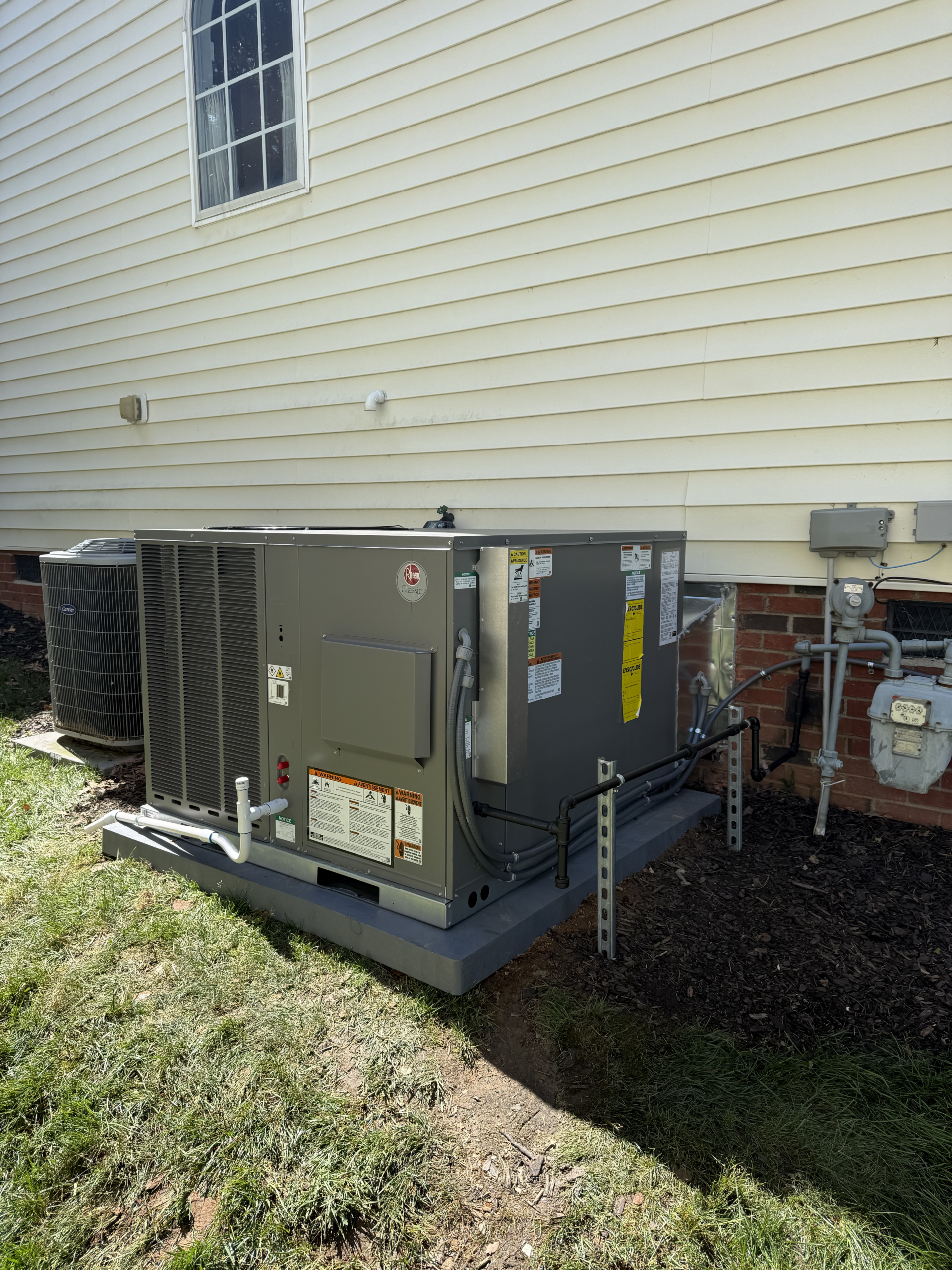
If your heat pump seems like it never shuts off, it is understandable to wonder whether something is wrong.
Heat pumps often run longer than traditional furnaces because they heat your home differently. Instead of creating a large amount of heat all at once, a heat pump moves heat from the outdoor air into your home. During colder weather, that process may require longer heating cycles.
However, a heat pump that runs almost constantly while your home still feels cold can also be a sign of restricted airflow, thermostat problems, refrigerant issues, equipment problems, or another condition that needs attention.
At Hayes HVAC, LLC, we help homeowners throughout Clayton, Raleigh, Cary, Apex, Garner, Fuquay-Varina, Holly Springs, Knightdale, and surrounding communities keep their heating systems operating efficiently and reliably. Here are seven common reasons your heat pump may be running constantly and when it may be time to call a professional.
Is It Normal for a Heat Pump to Run for Long Periods?
Sometimes, yes.
Heat pumps are designed to maintain steady indoor temperatures rather than creating short bursts of intense heat. During colder North Carolina weather, your system may run for longer periods because it has to work harder to transfer enough heat from the outdoor air into your home.
Longer operation can also be normal when:
- Outdoor temperatures drop significantly
- You recently increased the thermostat setting
- Your home is recovering from a temperature setback
- The system is completing a defrost cycle
- Your heat pump is maintaining a steady temperature during cold weather
What matters most is whether your home is reaching and maintaining the thermostat setting.
If the system runs for long periods but your home remains comfortable, it may simply be operating as designed. If it runs nonstop and the indoor temperature continues dropping, there may be a problem.
Professional Heating Services can help determine whether your heat pump is operating normally or working harder than it should.
1. Cold Outdoor Temperatures Are Making the System Work Harder
One of the simplest explanations for a heat pump running constantly is cold weather.
Heat pumps collect heat from the outdoor air and transfer it into your home. As outdoor temperatures fall, your heat pump has to work harder to extract and transfer enough heat to maintain the temperature inside your home.
That means the heat pump may need to run longer to maintain your thermostat setting.
During especially cold weather, you may also notice auxiliary heat operating along with the heat pump. Auxiliary heat is a backup heat source that can automatically assist the heat pump when additional heating is needed.
A longer heating cycle or occasional auxiliary heat operation does not necessarily mean something is broken.
However, there may be a problem if:
- The home never reaches the thermostat setting
- The indoor temperature continues falling
- Auxiliary heat seems to run constantly, especially during milder weather
- Energy usage suddenly increases
- The system never appears to shut off
If your heat pump struggles every time temperatures drop, an HVAC technician can evaluate whether the system is operating properly and whether another issue is reducing performance.
2. Your Air Filter Is Dirty
A clogged air filter can make your heat pump work much harder than necessary.
Your system needs steady airflow to distribute heated air throughout the home. When dust, pet hair, pollen, and other debris collect on the filter, airflow through the system becomes restricted.
The heat pump may then need to run longer to move enough conditioned air through the house.
Signs of a dirty filter can include:
- Weak airflow from vents
- Longer heating cycles
- Uneven room temperatures
- More dust around the home
- Rising energy bills
- A system that rarely shuts off
Check your filter regularly and replace it when it appears dirty.
Keeping up with filter changes is one of the easiest ways to support proper airflow and reduce unnecessary strain on HVAC equipment.
Hayes HVAC’s Maintenance Plans can also help identify airflow problems and other issues before they begin affecting comfort.
3. Your Thermostat May Be Causing the Problem
Sometimes the heat pump is functioning correctly, but the thermostat is telling it to keep running.
Start by checking the thermostat setting.
Make sure the system is set to Heat and that the temperature is not set much higher than the current indoor temperature.
Increasing the thermostat several degrees at once can cause the heat pump to run for an extended period as it tries to catch up and may also cause auxiliary heat to activate on some systems.
Other thermostat issues can include:
- Incorrect programming
- Weak batteries
- Temperature sensor problems
- Poor thermostat placement
- Wiring issues
- Incorrect heat pump settings
A thermostat located near a drafty door, window, or unusually cold area may also read a lower temperature than the rest of the home and continue calling for heat.
If the temperature displayed on the thermostat does not seem accurate, or the system continues running even after the desired temperature is reached, professional inspection may be needed.
4. The Outdoor Unit Is Dirty or Blocked
Your outdoor heat pump needs adequate airflow to transfer heat efficiently.
Leaves, grass, dirt, branches, and other debris can collect around the outdoor unit and interfere with normal operation.
During colder weather, frost can also form on the outdoor coil.
A small amount of frost can be normal and should usually be removed during the system’s automatic defrost cycle. However, heavy ice that does not disappear can reduce the system’s ability to absorb and transfer heat.
Check around the outdoor unit and make sure:
- Leaves and debris are removed
- Plants are not growing against the equipment
- Airflow around the unit is not blocked
- The unit is not covered in heavy ice
Do not chip or scrape ice from the coil, as this can damage the equipment.
If the outdoor unit repeatedly freezes or remains heavily iced over, schedule professional service.
5. Your Heat Pump May Be Low on Refrigerant
Heat pumps rely on refrigerant to transfer heat between the indoor and outdoor units.
If refrigerant levels become too low, the system may struggle to transfer enough heat and may compensate by running for much longer periods.
Refrigerant does not normally get used up during operation. A low refrigerant level can indicate a leak somewhere in the system.
Possible signs include:
- Long or nonstop heating cycles
- Poor heating performance
- Ice on the outdoor unit or refrigerant lines
- Unusual hissing or bubbling noises
- Higher energy bills
- Difficulty reaching the thermostat setting
Refrigerant problems require professional attention.
A technician can inspect the system, determine whether a leak is present, and evaluate the correct repair rather than simply adding more refrigerant without addressing the underlying cause.
Because the same refrigeration system is also used during cooling season, refrigerant problems can affect both heating and Cooling Services performance.
6. Your Home May Be Losing Heat Too Quickly
Sometimes the problem is not entirely with the heat pump.
If your home is losing heat faster than the system can replace it, the heat pump may need to run almost continuously just to maintain a comfortable temperature.
Heat loss can be caused by:
- Poor attic insulation
- Drafty windows or doors
- Air leaks
- Leaky ductwork
- Open fireplace dampers
- Poorly sealed crawl spaces
- Ducts running through unconditioned areas
You may notice some rooms remain colder than others or that the system works hardest on windy or especially cold days.
Airflow and ductwork problems can also make it difficult for conditioned air to reach every part of the home.
Hayes HVAC provides Indoor Air Quality solutions that can help address airflow, humidity, filtration, and other indoor comfort concerns.
7. The Heat Pump May Have a Mechanical or Electrical Problem
If your heat pump is running constantly and the basic causes have been ruled out, there may be a problem with one of the system’s internal components.
Heat pumps rely on several parts working together to move heat and maintain indoor comfort.
Potential issues may involve:
- The compressor
- Reversing valve
- Blower motor
- Defrost controls
- Sensors
- Capacitors
- Electrical connections
- Auxiliary heating components
A failing component may reduce heating performance without completely shutting the system down.
This can leave the heat pump running for extended periods as it tries unsuccessfully to reach the thermostat setting.
Other warning signs can include:
- Unusual buzzing, grinding, or clicking noises
- Weak airflow
- Cold air from the vents
- Frequent cycling
- Repeated breaker trips
- Outdoor unit icing
- Unexpected increases in energy usage
Professional diagnosis is the best way to determine which component is responsible.
What Can You Check Before Calling an HVAC Professional?
There are a few simple things homeowners can safely check before scheduling service.
Start by:
- Checking the thermostat setting
- Replacing a dirty air filter
- Making sure supply vents are open
- Removing objects blocking return vents
- Clearing leaves and debris around the outdoor unit
- Looking for heavy ice on the outdoor equipment
- Checking whether the home is actually reaching the thermostat setting
Avoid opening equipment panels or attempting refrigerant, electrical, or mechanical repairs yourself.
If the heat pump continues running almost constantly after these basic checks, it may be time for professional service.
When Should You Call an HVAC Professional?
A heat pump running for long periods is not always a problem, especially during colder weather.
However, schedule service if:
- Your heat pump never seems to shut off
- Your home cannot reach the thermostat setting
- The system blows cold air for long periods
- Energy bills increase unexpectedly
- The outdoor unit is covered in heavy ice
- You hear unusual noises
- Airflow becomes noticeably weaker
- Auxiliary heat seems to stay on constantly during conditions when it normally would not be needed
- The system repeatedly turns on and off
An experienced technician can inspect the equipment, airflow, thermostat, refrigerant system, and electrical components to determine why the system is working so hard.
Hayes HVAC’s Heating Services can help identify the source of the problem and recommend the right solution for your home.
Regular Maintenance Can Help Your Heat Pump Run More Efficiently
Because heat pumps provide both heating and cooling, they often operate throughout most of the year.
That makes regular maintenance especially important.
Professional maintenance may include checking:
- Air filters
- Indoor and outdoor coils
- Electrical connections
- Thermostat operation
- Refrigerant system performance
- Blower components
- Defrost operation
- Outdoor equipment
- Overall heating and cooling performance
Routine inspections can help identify small problems before they cause the system to run inefficiently or lead to a complete breakdown.
They can also help your heat pump perform more reliably during both North Carolina summers and winters.
Trust Hayes HVAC for Heat Pump Service in North Carolina
If your heat pump seems to run constantly, it may simply be responding to cold outdoor temperatures. However, dirty filters, thermostat problems, blocked outdoor equipment, low refrigerant, home heat loss, or mechanical issues can also cause the system to work harder than it should.
Hayes HVAC proudly provides Heating Services, Cooling Services, Maintenance Plans, and Indoor Air Quality solutions for homeowners throughout Clayton, Raleigh, Cary, Apex, Garner, Fuquay-Varina, Holly Springs, Knightdale, and surrounding communities.
Our team is committed to honest recommendations, dependable workmanship, and helping North Carolina homeowners stay comfortable throughout every season.
If your heat pump is running nonstop or struggling to keep your home warm, contact Hayes HVAC today at (919) 609-2006 for a free estimate. Whether you need heat pump repair, routine maintenance, improved airflow, or help diagnosing a heating problem, our team is ready to help.